Source Digital Halogen Moisture Balance for Agriculture, Chemicals, Food
Compare 30 Digital Halogen Moisture Balance units from Chinese manufacturers. These devices offer precision weighing and rapid heating for agriculture, chemicals, and food applications with capacities ranging from 50g to 100g.
Key considerations
Products List


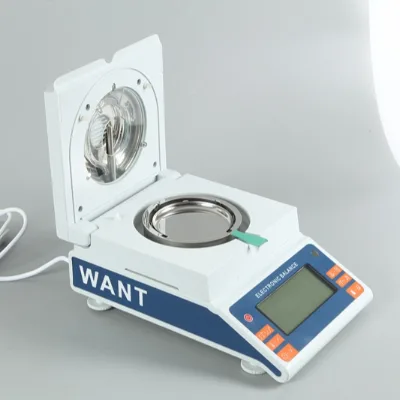


Digital Halogen Moisture Meter for Lab Testing Instrument (Moisture Meter)
$390.00 - $1499.00
MOQ: 1 Pieces


Es-F102 Series Rapid Moisture Analysis Analyzer Digital Balance Halogen Moisture Meter
$1000.00 - $3000.00
MOQ: 1 Pieces

High Precision Halogen Moisture Meter Rapid Halogen Moisture Analyzer Moisture Content Meter
$1000.00 - $3000.00
MOQ: 1 Pieces


Comprehensive Sourcing Guide
Strategic Sourcing Guide for Digital Halogen Moisture Balances
Understanding Technical Specifications and Performance Metrics
When sourcing a Digital Halogen Moisture Balance, buyers must first distinguish between the various technical configurations available in the current market. The core functionality of these devices relies on the halogen heating method, which utilizes high-intensity halogen lamps to rapidly dry samples and measure moisture content through weight loss. Based on observed product attributes, the market offers units with varying capacities, ranging from 50g to 110g, and specific weight ranges such as 0-110g. It is critical to note that capacity and weight range are distinct parameters; a balance with a 100g capacity may have a different maximum weighing range than one with a 50g capacity.
Accuracy is a primary differentiator among these instruments. The supplied data indicates a high-confidence observation of accuracy specifications ranging from 0.001g (1mg) to 0.01g. Some models are explicitly listed with an accuracy of 1mg, while others offer a tiered accuracy of 0.001g/0.005g/0.01g. Buyers should verify the specific accuracy requirement for their application, as analytical balances often require the 1mg precision, whereas general signs balances may operate within the 0.01g tolerance. The display technology is another key specification, with observed options including LCD and ExtraLCD interfaces. The operating mode varies significantly between keyboard-based controls and modern touch screen interfaces, influencing the user experience and the speed of data entry.
The heating mechanism is another vital technical consideration. While the core keyword specifies "halogen," the heating mode can differ. Some units utilize step heating, allowing for precise temperature control, while others feature rapid heating modes designed for throughput efficiency. The maximum temperature settings observed in the market data reach up to 180 degrees, which is sufficient for most agricultural and chemical applications. However, buyers must confirm the maximum temperature limit for their specific sample type to ensure the material does not degrade before moisture is fully evaporated. Furthermore, the analysis method is typically categorized as physical analysis, though some advanced units may support chemical analysis types, such as the toluene method, depending on the specific model configuration.
Compliance, Certification, and Regulatory Standards
Navigating the regulatory landscape is essential for international procurement. The supplied product facts highlight several critical certifications that buyers should look for to ensure compliance with international safety and quality standards. The most frequently observed standards include CE, ISO, and SGS. These certifications indicate that the manufacturing processes and the final product meet specific European and international safety and quality benchmarks. Additionally, some models are listed with C-TICL (often associated with C-Tick for Australian compliance) and ROHS (Restriction of Hazardous Substances) certifications. The presence of these marks suggests the device adheres to environmental regulations regarding hazardous materials and electromagnetic compatibility.
When evaluating a potential supplier, buyers should request proof of these certifications rather than relying solely on product listings. The origin of the products is predominantly China, with specific mentions of Changzhou as a manufacturing hub. While the country of origin is a known fact, the specific factory location and the validity of the certifications should be verified directly. The product standards listed, such as CE and ISO, are general compliance markers. Buyers must ensure that the specific model they intend to purchase carries the valid certificate for their target market. For instance, if the equipment is destined for the European Union, the CE mark is mandatory. If the destination is Australia, the C-Tick certification is crucial.
The material composition of the balance also plays a role in compliance and durability. The observed material breakdown includes PBT (Polybutylene Terephthalate) and Stainless Iron 304. Stainless Steel 304 is a standard grade for laboratory equipment due to its corrosion resistance, which is vital when handling chemical samples or moist agricultural products. The use of PBT in the housing provides durability and resistance to heat and chemicals. Buyers should verify that the stainless steel grade matches the 304 specification to ensure long-term resistance to rust and chemical attack, which is particularly important in the agriculture and food sectors where hygiene is paramount.
Cost Drivers and Pricing Structures
The pricing of digital halogen moisture balances is influenced by a complex array of factors, including accuracy, capacity, display technology, and certification levels. The observed price range in the market spans from 50 USD to 5000 USD, indicating a significant variance based on the sophistication of the unit. Lower-priced units typically correspond to general signs balances with standard accuracy (0.01g) and basic LCD displays. In contrast, the higher end of the price spectrum likely encompasses analytical balances with 1mg accuracy, touch screen interfaces, and advanced features like RS232 interfaces for data connectivity.
The Minimum Order Quantity (MOQ) observed in the market is consistently 1 unit, which suggests a flexible purchasing environment for individual buyers and small businesses. This low MOQ reduces the barrier to entry for testing new equipment. However, the cost per unit may fluctuate based on the customization options available. The product attributes indicate that customization is available, which can impact the final price. Customization might include specific packing requirements, such as standard export cartons versus aluminum boxes, or tailored interface settings.
Buyers should be aware that the "observed" price range is a market snapshot and not a fixed list price. The actual cost will depend on the specific configuration selected, such as the inclusion of a calibration weight (observed as 50g in some models) or specific interface types. The interface type, such as RS232, adds value by enabling direct data transfer to computers or printers, which is essential for quality control in industrial settings. Additionally, the physical analysis type, such as the weightlessness method, is a standard feature, but the implementation and precision of this method contribute to the overall cost.
Typical Applications and Industry Use Cases
Digital halogen moisture balances are versatile instruments designed for a wide range of applications, primarily in the agriculture, food, and chemical sectors. The observed application data explicitly lists "Agriculture & Food" and "Chemicals" as primary use cases. In the agriculture sector, these balances are used to determine the moisture content of grains, seeds, and soil samples, which is critical for storage stability and quality assessment. The ability to handle samples up to 110g allows for representative sampling of bulk agricultural products.
In the food industry, moisture content is a key quality parameter affecting shelf life, texture, and safety. The halogen heating method is particularly effective for food samples as it provides rapid and uniform drying without burning the sample, provided the temperature is set correctly. The maximum temperature of 180 degrees is suitable for most food products, but buyers should verify the specific temperature requirements for their samples to avoid thermal degradation. The chemical analysis applications involve determining moisture in various chemical compounds, where precision is paramount. The observed accuracy of 0.001g is essential for these high-precision applications.
The "General Signs Balance" and "Analytical Balance" classifications indicate that these devices serve different levels of precision needs. General signs balances are suitable for quick checks in production lines, while analytical balances are required for laboratory-grade testing. The "Test of Balance" usage suggests that these instruments are also used for calibration and verification of other weighing equipment. The portability of some units, noted as "Portable" in the data, makes them suitable for field applications in agriculture, while non-portable units are better suited for fixed laboratory environments.
Supplier Evaluation and Quality Control Protocols
Evaluating suppliers for digital halogen moisture balances requires a rigorous approach to ensure product quality and reliability. Buyers should prioritize suppliers who can provide clear documentation of their manufacturing processes and quality control measures. The observed product attributes, such as the use of Stainless Steel 304 and PBT materials, should be verified through material test reports. The presence of certifications like CE, ISO, and SGS is a positive indicator, but buyers must ensure these certifications are current and applicable to the specific model being purchased.
Quality control should extend beyond the initial purchase. Buyers should inquire about the supplier's calibration procedures and the availability of calibration weights, such as the observed 50g weight. The calibration process is critical for maintaining the accuracy of the balance over time. Suppliers should offer clear instructions on how to perform calibration and whether the device supports automatic or manual calibration modes. The observed "Manual" off mode and "Keyboard" or "Touch Screen" operating modes suggest that user interaction is a key part of the quality control process.
When selecting a supplier, buyers should also consider the after-sales support and warranty terms. The "Standard Export Carton" packing suggests a focus on safe transportation, but buyers should verify if the packaging includes protective materials for the sensitive electronic components. The "Aluminium Box" packing option for certain models indicates a higher level of protection, which may be preferred for portable units. Additionally, the availability of spare parts and technical support is crucial for long-term maintenance. Buyers should ask about the lead time for repairs and the availability of replacement parts like heating elements or display screens.
Long-Term Procurement and Operational Considerations
Long-term procurement of digital halogen moisture balances involves more than just the initial purchase price. Buyers must consider the total cost of ownership, which includes maintenance, calibration, and potential downtime. The "Step Heating" and "Rapid Heating" modes offer different operational efficiencies. Step heating allows for precise control, which may reduce the risk of sample degradation over time, while rapid heating increases throughput. The choice between these modes should align with the buyer's production volume and quality requirements.
The interface capabilities, such as the RS232 connection, are vital for integrating the balance into a larger quality management system. This connectivity allows for automated data logging, which is essential for traceability and compliance in regulated industries. Buyers should verify the compatibility of the RS232 interface with their existing software and hardware infrastructure. The "Time Setting" options, which can be manual or automatic, also impact the operational workflow. Automatic time setting can streamline the testing process, reducing the risk of human error.
Finally, buyers should consider the environmental and safety aspects of the equipment. The halogen heating method is generally safe, but the high temperatures involved require proper ventilation and handling procedures. The "Weightlessness Method" of physical analysis is a standard technique, but buyers should ensure that the specific implementation in the chosen model meets their safety and accuracy standards. By carefully evaluating these long-term factors, buyers can make informed decisions that ensure the reliability and efficiency of their digital halogen moisture balances over the lifespan of the equipment.
FAQs
What accuracy levels are available for digital halogen moisture balances?
Available accuracy levels range from 1mg to 0.01g depending on the specific model. Some units offer tiered precision of 0.001g, 0.005g, or 0.01g, while others are fixed at 1mg for analytical applications.
Which heating methods do these balances use for sample drying?
These balances primarily utilize halogen heating methods for rapid and uniform drying. Options include step heating for precise temperature control and rapid heating modes designed to increase sample throughput efficiency.
Can I find portable digital halogen moisture balances for field use?
Yes, portable models are available alongside non-portable laboratory units. Portable versions often feature touch screens and aluminum box packing, making them suitable for field applications in agriculture and chemical sectors.
What certifications ensure compliance for international procurement of these devices?
Common certifications include CE, ISO, SGS, RoHS, and C-Tick for regulatory compliance. Buyers should verify specific model certificates to ensure they meet the safety and quality standards required for their target market.
How does the capacity of a balance affect its weight range?
Capacity and weight range are distinct parameters that vary by model. Units may offer capacities of 50g or 100g, with weight ranges extending up to 110g, allowing for representative sampling of bulk agricultural products.
What display types are used in digital halogen moisture balances?
Display options include standard LCD and ExtraLCD interfaces for clear readability. Modern units may feature touch screen operating modes, while others rely on keyboard controls for data entry and parameter setting.